

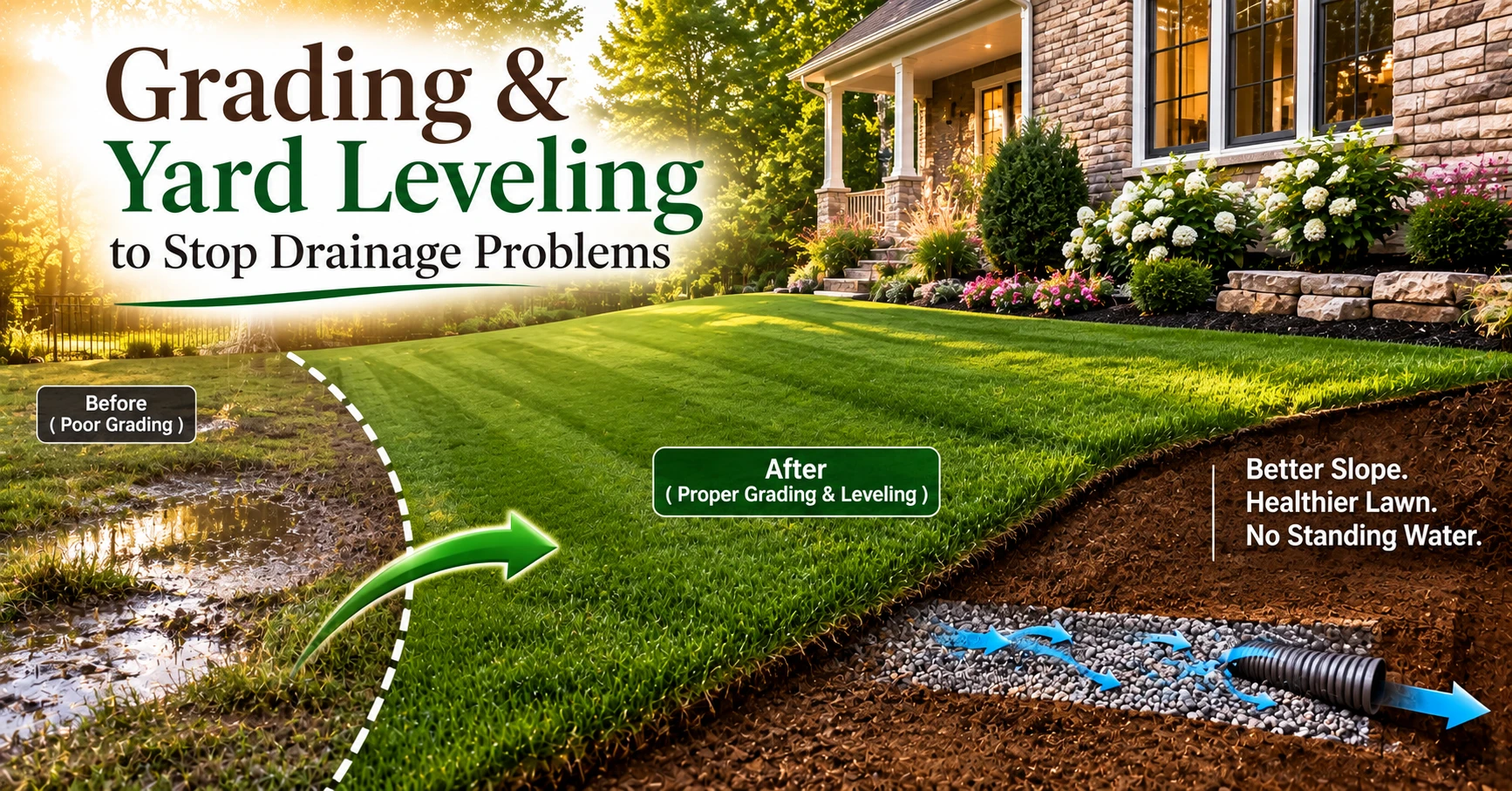
Most drainage problems are not really drainage problems. They are grading problems that show up as water in the wrong place. A wet crawlspace, a soggy corner of the yard, mulch washing across the driveway, a foundation crack that keeps coming back: trace almost any of these back far enough and you land on the same root cause, which is ground that was never shaped to move water away from where it can do damage.
Grading is the dirt work that fixes that. Done right, it is invisible and you never think about it. Done wrong or skipped entirely, it quietly costs homeowners far more than the grading would have.
What Grading Actually Is
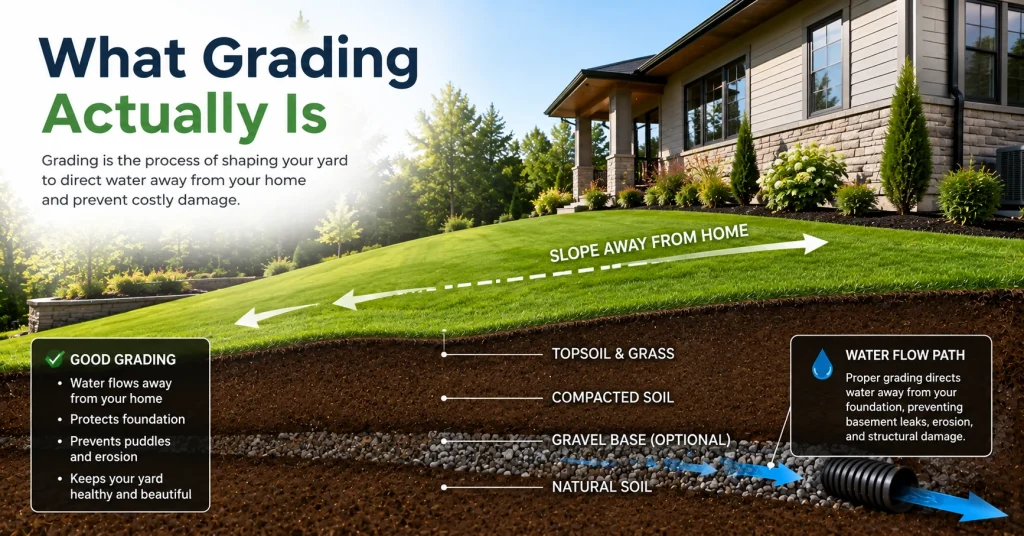
Grading is the process of shaping and sloping the soil on a property so that water flows where you want it to go. It covers the rough leveling of a site, the fine shaping of the surface, and the careful setting of slope away from structures. It is measured in fractions of an inch per foot, and those small numbers decide whether a yard sheds water or holds it.
There are two stages people often lump together. Rough grading moves the big volumes of earth to establish the general shape and elevation of a site, usually with a skid steer or mini excavator. Finish grading is the fine work that follows, smoothing the surface and dialing in the final slopes before sod, seed or hardscape goes down. Skipping or rushing the finish stage is where a lot of drainage trouble begins.
Why Slope Is Everything
Water does exactly one thing: it runs downhill and collects at the lowest point it can reach. Grading is simply the practice of deciding, on purpose, where that lowest point is, and making sure it is not against your house.
The standard most builders follow is a slope of about six inches of drop over the first ten feet away from the foundation, which works out to roughly a quarter inch per foot. That grade is enough to carry water away without being noticeable underfoot. When the ground instead slopes toward the house, or sits flat and holds water, rain pools where the soil meets the foundation, and that is where the expensive problems start.
Even a yard that looks flat to the eye can be running water the wrong way. The difference between draining and pooling is often an inch or two across a span, far too subtle to see but more than enough to matter.
What Poor Grading Costs You
When the grade is wrong, water goes where it should not, and it works patiently. The most common results include a wet or flooded crawlspace or basement, standing water and soggy low spots that kill grass and breed mosquitoes, erosion that carves channels through the yard and washes out mulch and topsoil, and foundation stress as saturated soil expands, contracts and settles unevenly against the footing.
That last one is the reason grading is worth taking seriously. Water against a foundation is the leading driver of settlement and cracking, and foundation repair is one of the most expensive fixes a homeowner can face. The grading that would have prevented it is a small fraction of that cost.
The Signs Your Yard Has a Grading Problem
You do not need instruments to spot trouble. Watch the yard during and just after a heavy rain and the problems reveal themselves. Look for water pooling near the foundation or in the same low spots every time, gutters and downspouts that dump water that then has nowhere to go, mulch or gravel migrating downhill onto walkways and driveways, bare eroded channels forming across the lawn, and a crawlspace or basement that smells damp or shows water lines. Any one of these points back to how the ground is shaped.
How Grading and Drainage Work Together
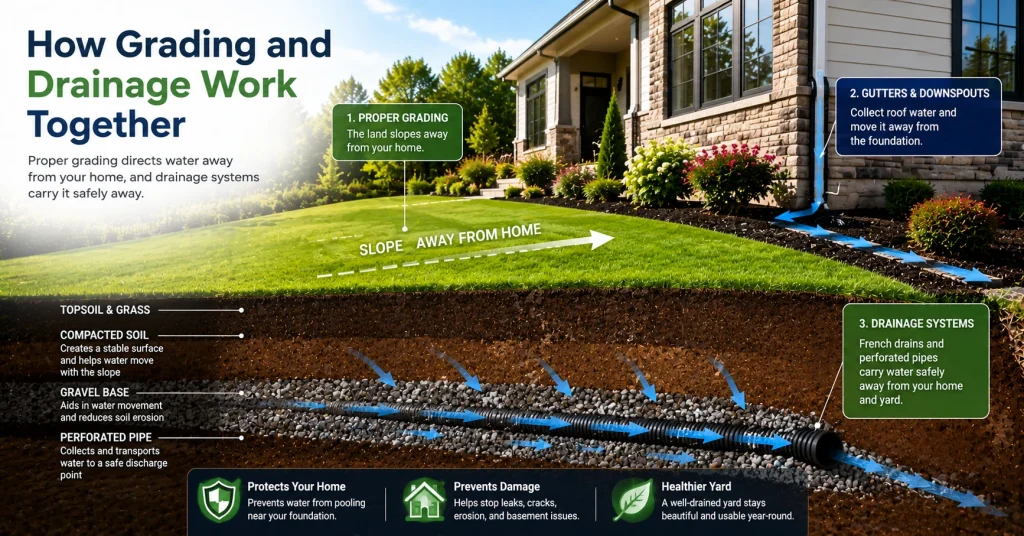
Grading is the first line of defense, but it is not always the whole answer. On a property that sheds water well, good grading alone can solve everything. On tighter lots, flatter ground or heavy clay soil, grading sets the stage and a drainage system finishes the job.
That is why the two are best planned together. Once the grade establishes where water wants to go, features like French drains, channel drains, downspout extensions and swales give it a defined path to leave the property. A French drain carries subsurface water away through a gravel-bedded perforated pipe. A swale is a shallow, graded channel that moves surface water along a chosen route. Downspout extensions simply carry roof water past the foundation zone before releasing it. Each one depends on the grade being right first, because no drain can move water uphill.
Why It Pays to Get It Right the First Time
Grading is one of those jobs where the cost of doing it correctly up front is small compared to the cost of correcting the consequences later. Regrading an established yard means working around finished landscaping, hardscape and irrigation, which is slower and more expensive than shaping bare ground. Fixing water damage to a foundation or a crawlspace costs more still.
Proper dirt work also protects everything you build on top of it. A patio, a retaining wall, a new lawn or a garden bed all last longer and perform better when the ground beneath them drains. That is the case for treating grading not as an afterthought but as the foundation of the whole project.
Frequently Asked Questions
What slope should my yard have away from the house?
The common standard is about six inches of fall over the first ten feet from the foundation, or roughly a quarter inch per foot. That is enough to carry water away without being noticeable to walk on. Beyond that first zone, the yard should continue to slope gently toward a safe outlet.
Can I fix drainage without regrading?
Sometimes. If the grade is basically sound, adding drainage such as a French drain, swale or downspout extensions can solve a localized problem. But if the ground itself slopes toward the house or holds water, no drain fully compensates, and regrading is the real fix.
How do I know if my grading is the problem?
Watch your yard during a heavy rain. Water pooling near the foundation, standing in the same low spots, or eroding channels across the lawn all point to a grading issue. A crawlspace that stays damp is another strong signal.
Does grading damage my existing lawn?
Regrading disturbs the surface, so some lawn areas are affected and usually need to be reseeded or resodded afterward. A good crew plans the work to limit disturbance and restores the surface as part of the job.
How long does a grading project take?
Most residential grading jobs take anywhere from a day to several days, depending on the size of the yard, how much earth has to move and whether drainage features are added. Weather also plays a role, since soil needs to be workable.
Water Going Where It Should Not?
Avant Land Co handles grading, dirt work, yard leveling and drainage for homeowners in Conway and throughout Horry County and the Grand Strand. Because we run the skid steer and set the drainage ourselves, the slope and the system that carries water off your property are planned as one job, not two.
Call (843) 516-6333 or request your free estimate online.