

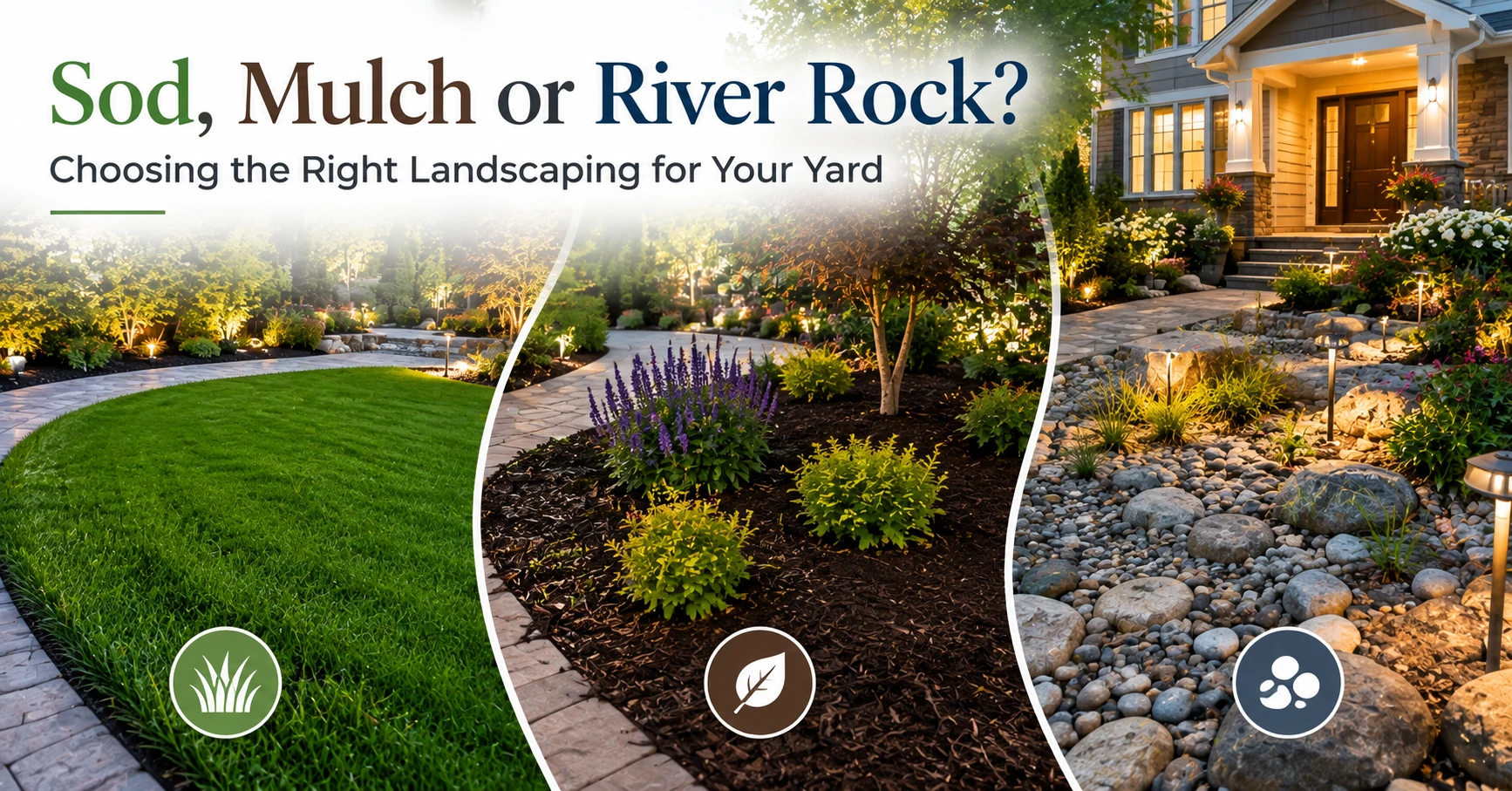
Sod, mulch and river rock are three of the most common ways to finish a yard, and they solve very different problems. One gives you an instant lawn. One feeds your plants and holds moisture. One handles water and never needs replacing. Picking the right one for each area of your property comes down to how the space is used, how much upkeep you want, and how water moves across your land.
Here is how the three compare, and how to decide what goes where.
Sod: An Instant, Living Lawn
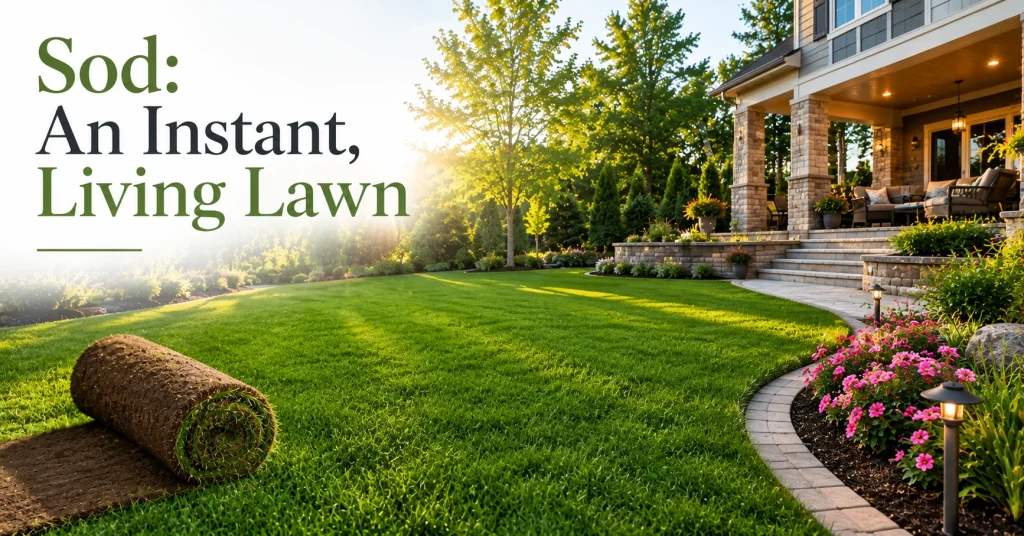
Sod is grass grown on a farm and delivered in rolls or slabs that are laid directly onto prepared soil. Within a couple of weeks the roots knit into the ground and you have a full, green lawn without waiting a full season for seed to fill in.
Sod is the right choice when you want usable green space: a backyard for kids and pets, a front lawn for curb appeal, or any area where people will walk and play. It also does real work on a property, holding soil in place, cooling the area around it, and filtering rainwater.
The trade is maintenance. A lawn is a living thing that needs mowing, watering, feeding and the occasional weed treatment. The first few weeks after install are the most important, since new sod needs consistent water to root. In the Conway and Grand Strand area, warm-season grasses such as centipede, Zoysia and Bermuda perform well, and the right pick depends on how much sun the area gets and how much traffic it takes.
Get the prep right and sod rewards you. That means grading the area so it drains, loosening and amending the soil, and laying the pieces tight with staggered seams so there are no gaps. Sod laid on poor, uneven soil struggles no matter how good the grass is.
Mulch: The Workhorse for Beds and Plantings
Mulch is a layer of organic material, usually shredded hardwood, pine bark or pine straw, spread across garden beds and around trees and shrubs. It is not there to look pretty, though it does. It is there to work.
A good mulch layer holds moisture in the soil so plants need less water, suppresses weeds by blocking sunlight, regulates soil temperature through hot summers and cool nights, and slowly breaks down to feed the soil beneath it. A clean band of fresh mulch also sharpens the whole yard, framing beds and making plantings look finished.
Mulch is the right choice around anything that grows: foundation plantings, flower beds, trees, shrubs and vegetable gardens. Two to three inches is the sweet spot. Too thin and weeds push through. Too thick and you can smother roots and hold too much water against stems.
The trade is that mulch breaks down. Because it is organic, it decomposes and needs topping up, usually once a year, to keep its depth and color. Most homeowners see that as a feature rather than a flaw, since that same breakdown is what enriches the soil over time.
River Rock: Permanent and Low Maintenance
River rock is smooth, rounded stone used as a permanent ground cover. Unlike mulch, it does not decompose, so it does not need replacing year after year. Once it is installed correctly, it stays put.
River rock earns its place where you want a clean look with almost no upkeep, and especially where water is a factor. It is excellent in dry creek beds and drainage swales that channel runoff, around downspouts where splashing water would wash mulch away, along foundations, and in low-traffic borders and side yards where mowing is a hassle.
The key to river rock is what goes underneath it. A quality landscape fabric laid first blocks weeds and keeps the stone from sinking into the soil below. Skip that step and you get weeds growing up through the rock and stone disappearing into mud, which is the most common reason a rock bed looks bad within a year.
The trade is that river rock is not for planting beds you plan to change often, and it does not feed the soil the way mulch does. It also holds heat, so it is not ideal right up against heat-sensitive plants. But for permanent, water-smart, walk-away areas, nothing beats it.
How to Decide What Goes Where
Most yards are not an either-or. The best results usually combine all three, each doing the job it is built for.
- Use sod for the open, usable lawn areas where you want green space.
- Use mulch in your planting beds, around trees and anywhere plants are actively growing.
- Use river rock for drainage paths, downspout areas, foundation lines and low-maintenance zones.
A few questions make the call easier. How is the area used, for play or just for looks? How much upkeep do you actually want to take on? And, most importantly, where does water go when it rains? Drainage is the deciding factor in more of these choices than people expect. A low, wet spot that stays soggy is a poor place for mulch or sod but a natural fit for a river rock swale.
The Prep Matters More Than the Material
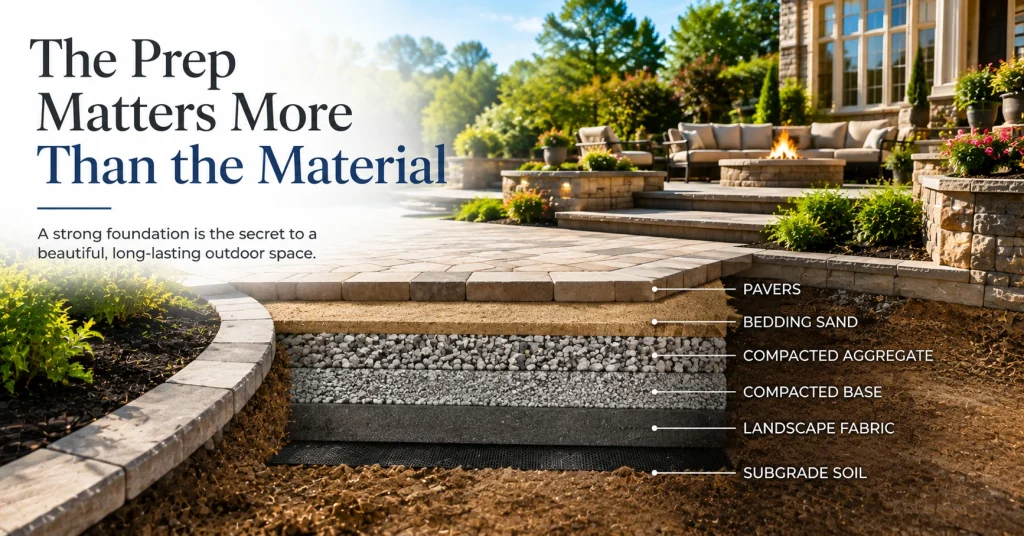
Whichever you choose, the result is only as good as the groundwork. Sod needs graded, amended soil. Mulch needs clean, edged beds at the right depth. River rock needs fabric and proper edging to stay contained. Grading and drainage sit underneath all three, which is why it pays to have the same crew handle the dirt work and the finish. When the grade sends water where it should go, every ground cover you lay on top of it performs better and lasts longer.
Frequently Asked Questions
Which is cheaper, mulch or river rock?
Mulch costs less to install up front, but it has to be refreshed every year. River rock costs more initially yet rarely needs replacing, so over several years the ongoing cost often evens out. The right choice depends on how long you plan to leave the area unchanged.
How often does mulch need to be replaced?
Most beds benefit from a fresh top-up once a year, typically in spring, to restore depth and color. You are usually adding a thin layer rather than removing the old mulch, since the material underneath continues to enrich the soil as it breaks down.
Can I put river rock over grass or soil to stop weeds?
Not on its own. Rock laid straight onto soil will sink and let weeds grow through. It needs a quality landscape fabric underneath and proper edging around it. Done that way, it stays clean and contained for years.
When is the best time to lay sod?
Warm-season grasses establish best when laid in the growing season, from spring through early fall, so the roots have warmth to set before winter. Sod can be installed at other times with extra care, but the key in any season is consistent watering during the first few weeks.
Do I have to pick just one?
No, and most yards should not. Sod, mulch and river rock each solve a different problem, so the best landscapes use all three: sod for lawns, mulch for planting beds, and river rock for drainage and low-maintenance zones.
Not Sure What Your Yard Needs?
Avant Land Co installs sod, mulch, rock and full landscaping for homeowners in Conway and throughout Horry County and the Grand Strand. Because we handle grading and drainage too, we can make sure the ground cover you choose is set up on soil that actually drains.
Call (843) 516-6333 or request your free estimate online.